I design the systems, then ship the code.
I'm Muhammad Naeem, an AI Product Leader based in Lahore, Pakistan, with 10+ years of design across SaaS, Fintech, Data, Health and e-commerce. I turn hard ideas into simple apps with AI.

The story
I started as a front-end designer: the person who turns a layout into HTML and CSS and notices where the two disagree. That habit never left. It is why I care about tokens, component states and what a developer actually receives, and it pulled me from single screens into whole products, from a hotel booking engine and a pharma brand to crypto platforms and e-commerce.
Systems are where I do my best work. At MLK Group I led three designers and a shared component library that halved revision cycles across 50+ Australian brands, and for flagship e-commerce clients conversion rose 3x and online orders 2.5x. At EISST I rebuilt onboarding and setup for six high-security, privacy-first products: 500+ screens, a multi-platform design system with tokens, and full WCAG 2.1 AA, so one action finally looked and behaved the same on Mac, iOS and Android.
Today I lead design at SRED.io, a tax-credit platform for Canadian companies. I introduced its first design system on Flowbite, cut core pages by 70% with no loss of content, and worked on more than 17 microservices. I work with a front-end developer, and the designs reach production through Claude Code in Cursor, with Figma and Claude Code connected.
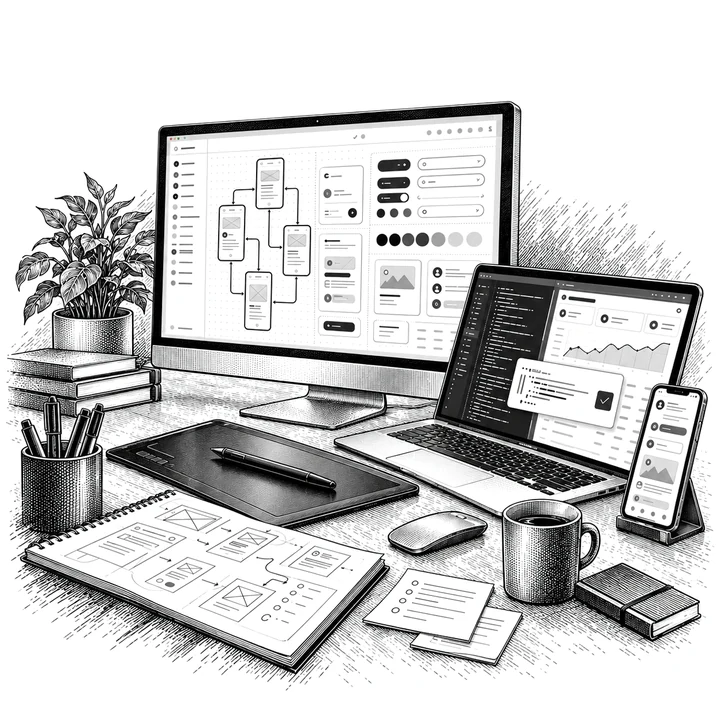
AI sits in the loop, not in charge. Claude Code takes the repetitive build work, in Cursor with Figma connected. Interviews, benchmarks, accessibility and product decisions stay with me, which is how a design system becomes code that developers can wire up instead of rebuild.
How I see it
Systems before screens
A shared design system comes first, so every product and every screen starts from the same foundation.
AI does the heavy lifting
AI handles the repetitive work. Taste, accessibility and product decisions stay human.
Design that ships
A design is finished when it is in code, so I hand developers working UI instead of static files.
How I work
Understand
Interviews, UX audits and benchmarks turn opinions into a validated foundation.
Shape
Information architecture, user flows and a design system turn findings into direction.
Build
Figma and code stay in sync through Figma MCP and GitHub, so what is designed is what ships.
Measure
Accessibility standards, UX laws and results such as conversion and order growth show whether it worked.
Beyond work
Based in Lahore, Pakistan, and open to full-time and long-term contract roles, remote or with relocation.